
Turning Mistakes Into Powerful Performance Moments
Pressure sharpens every sensation the second a performance begins. Muscles feel louder, timing feels tighter, and awareness expands in ways that never quite happen in rehearsal. Within that heightened state, mistakes are not just possible, they are inevitable. What matters most is not avoiding them at all costs, but knowing how to respond when they arrive uninvited.
Mistakes do not automatically weaken a performance. In many cases, they become the most human and memorable moments on stage. Audiences rarely know the choreography the way dancers do, and judges often watch for recovery as much as execution. The way a mistake is handled can quietly reveal confidence, artistry, and professionalism far more clearly than perfection ever could.
Redefining What a Mistake Really Is
A mistake only has power if it is defined as failure. I learned that many moments I labeled as errors were invisible to anyone watching. A missed turn, a late entrance, or an altered pathway often reads as intentional if it is carried with conviction.
The definition of a mistake shifts once perspective changes. Instead of viewing it as something that ruins the performance, it becomes a moment that demands adaptability. That shift alone alters how the body reacts under pressure.
By redefining mistakes as part of live performance, tension softens. Movement regains flow, and the focus returns to communication rather than correction.
Staying Physically Committed After an Error
The body often reacts before the mind catches up. When something goes wrong, shoulders tighten, breath shortens, and energy pulls inward. That physical withdrawal is what usually exposes the mistake to the audience.
Remaining physically committed keeps the moment alive. Full extension, grounded weight, and clear intention signal confidence even if the choreography has shifted. The body communicates certainty long before the mind processes what happened.
Commitment masks error. Audiences trust what they see in the body, not what the dancer is thinking internally.
Maintaining Facial Neutrality and Focus
Faces reveal panic quickly. A flicker of frustration or surprise draws attention faster than a missed step. I became aware of how important facial neutrality is in moments of recovery.
Neutral does not mean blank. It means staying emotionally present without reacting to the mistake itself. Keeping focus steady allows the performance to continue without interruption.
When the face remains calm, the audience assumes everything is going as planned. That assumption is powerful and often accurate enough to carry the moment forward.
Using Timing as a Recovery Tool
Timing offers flexibility that choreography does not always allow. If a step is missed, adjusting timing can reconnect the dancer to the phrase without forcing movement back into place. This adjustment often goes unnoticed.
I pay attention to musical phrasing rather than counts during recovery. Landing on strong musical moments restores structure even if specific steps change. Music becomes the guide rather than the mistake.
Timing creates coherence. It allows the performance to breathe and realign naturally.
Turning Awareness Outward
Mistakes become louder when attention turns inward. The instinct to self-monitor intensifies tension and breaks connection. Redirecting awareness outward shifts energy back into performance mode.
Focusing on space, music, or fellow performers creates grounding. That outward focus dissolves the internal spiral that often follows an error. Movement regains clarity when attention expands.
Audiences feel this shift immediately. Connection returns, and the moment passes without lingering.
Embracing Improvisation in the Moment
Improvisation skills provide safety nets. When choreography falls apart, improvisation fills the gap seamlessly. I rely on movement principles rather than memorized steps in these moments.
Using familiar shapes, pathways, or dynamics keeps movement consistent with the piece. The improvisation feels integrated rather than separate. This integration maintains the integrity of the performance.
Improvisation turns disruption into creativity. What could have been a breakdown becomes an unexpected highlight.
Trusting Muscle Memory
The body often knows what to do even when the mind freezes. Trusting muscle memory allows movement to continue without overthinking. That trust takes practice and repetition.
I let the body lead during recovery rather than forcing correction. Often, the next phrase arrives naturally once tension releases. This trust keeps the performance moving forward.
Muscle memory is reliable under pressure. Interfering with it usually causes more disruption than the original mistake.
Letting Go of Perfection Mid-Performance
Perfectionism magnifies mistakes. Holding onto the desire to fix everything immediately pulls focus away from the present moment. Letting go mid-performance is an act of discipline.
Once a mistake happens, it belongs to the past. Carrying it forward affects every movement that follows. Releasing it allows the performance to reset emotionally.
Audiences remember how a performance ends more than where it briefly faltered. Letting go protects that ending.
Using Breath to Reset the Body
Breath anchors recovery. A deep, intentional inhale resets the nervous system and brings the body back into alignment. This reset can happen in a fraction of a second.
I connect breath to movement immediately after an error. That connection restores rhythm and steadiness. Breath becomes the bridge back into flow.
Without breath, recovery feels rushed and tense. With breath, it feels intentional and grounded.
Reading the Energy of the Room
Live performance is a conversation. Energy shifts constantly between dancers and audience. I pay attention to that exchange during moments of recovery.
If energy feels supportive, leaning into confidence reinforces connection. If energy feels quiet, grounding the movement restores presence. Adjusting to the room keeps the performance responsive.
Mistakes often go unnoticed when energy remains engaged. Reading the room allows that engagement to continue uninterrupted.
Supporting Fellow Performers
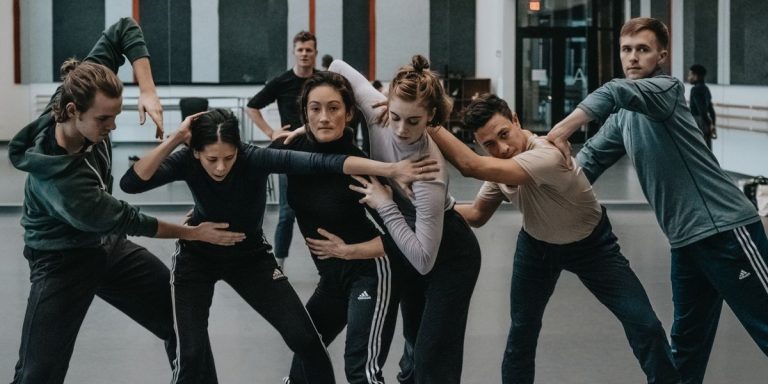
In group work, mistakes affect more than one person. Supporting fellow performers keeps the piece intact. Eye contact, spacing adjustments, and shared timing help everyone recover together.
I stay aware of others rather than isolating myself after an error. That awareness strengthens the group and prevents further disruption. Collective recovery often feels seamless.
Audiences respond positively to unity. They sense teamwork even if they do not understand the cause.
Reframing Mistakes as Emotional Opportunities
Mistakes can deepen emotional truth. Vulnerability often surfaces in moments of disruption. I allow that vulnerability to inform expression rather than hiding it.
This shift turns error into texture. The performance gains authenticity instead of losing polish. Emotion becomes more grounded and real.
Audiences connect to humanity more than precision. Emotional honesty transforms mistakes into moments of resonance.
Training Recovery as a Skill
Recovery deserves as much practice as technique. I rehearse what happens after something goes wrong rather than pretending it never will. This preparation builds confidence.
Running pieces with intentional disruptions trains adaptability. The body learns how to respond without panic. Recovery becomes automatic.
Preparedness reduces fear. Knowing how to recover removes the power mistakes hold.
Letting Confidence Lead the Narrative
Confidence shapes perception. If I treat a moment as intentional, audiences follow that narrative. Confidence rewrites the story instantly.
This does not require arrogance or denial. It requires commitment to the present moment. Confidence keeps the performance intact.
Judges often notice recovery more than error. Confidence signals professionalism and control.
Reflecting After, Not During
Reflection belongs after the curtain falls. Analyzing mistakes mid-performance fractures focus. I save evaluation for later.
Allowing the performance to exist without judgment protects its integrity. The body performs best without constant critique. Reflection becomes productive only when the moment has passed.
This separation keeps performance and practice distinct. Each has its own purpose and timing.
Allowing the Audience to Be Generous
Audiences want performers to succeed. They are not waiting for failure. I remind myself of this generosity when mistakes occur.
Assuming kindness softens fear. It allows movement to continue without defensive energy. The audience often meets that openness with support.
Believing in the audience changes how mistakes feel. They become shared moments rather than private disasters.
Final Thoughts
Mistakes are not interruptions to performance, they are part of it. What defines a dancer is not the absence of error, but the ability to respond with presence and clarity. Turning mistakes into powerful moments requires trust, adaptability, and a willingness to stay engaged.
I continue to learn that recovery is an art form of its own. It reveals confidence, humanity, and resilience in ways perfect execution rarely does. Performances become richer when dancers allow imperfection to exist without fear.
Live dance is alive precisely because it is unpredictable. When mistakes are met with commitment instead of panic, they transform into moments that feel honest, compelling, and unforgettable.